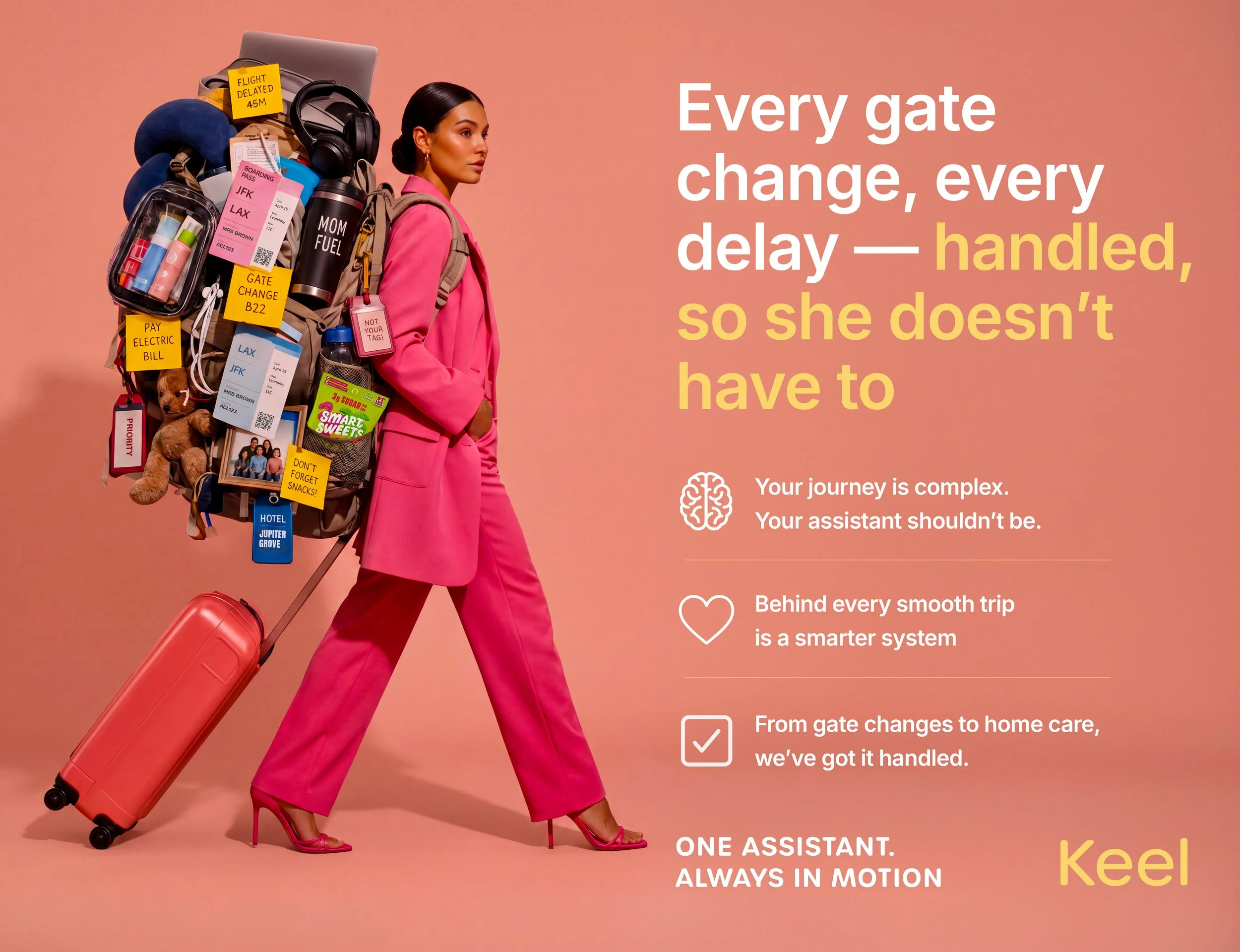
Keel
Keel is a concept campaign for an AI assistant built around a simple truth: the people who look the most put-together are often carrying the most. Rather than positioning AI as a productivity gimmick, Keel is framed as invisible infrastructure — the support system behind someone who's already holding everything together.
Core idea: She holds it together. We hold what's behind her.
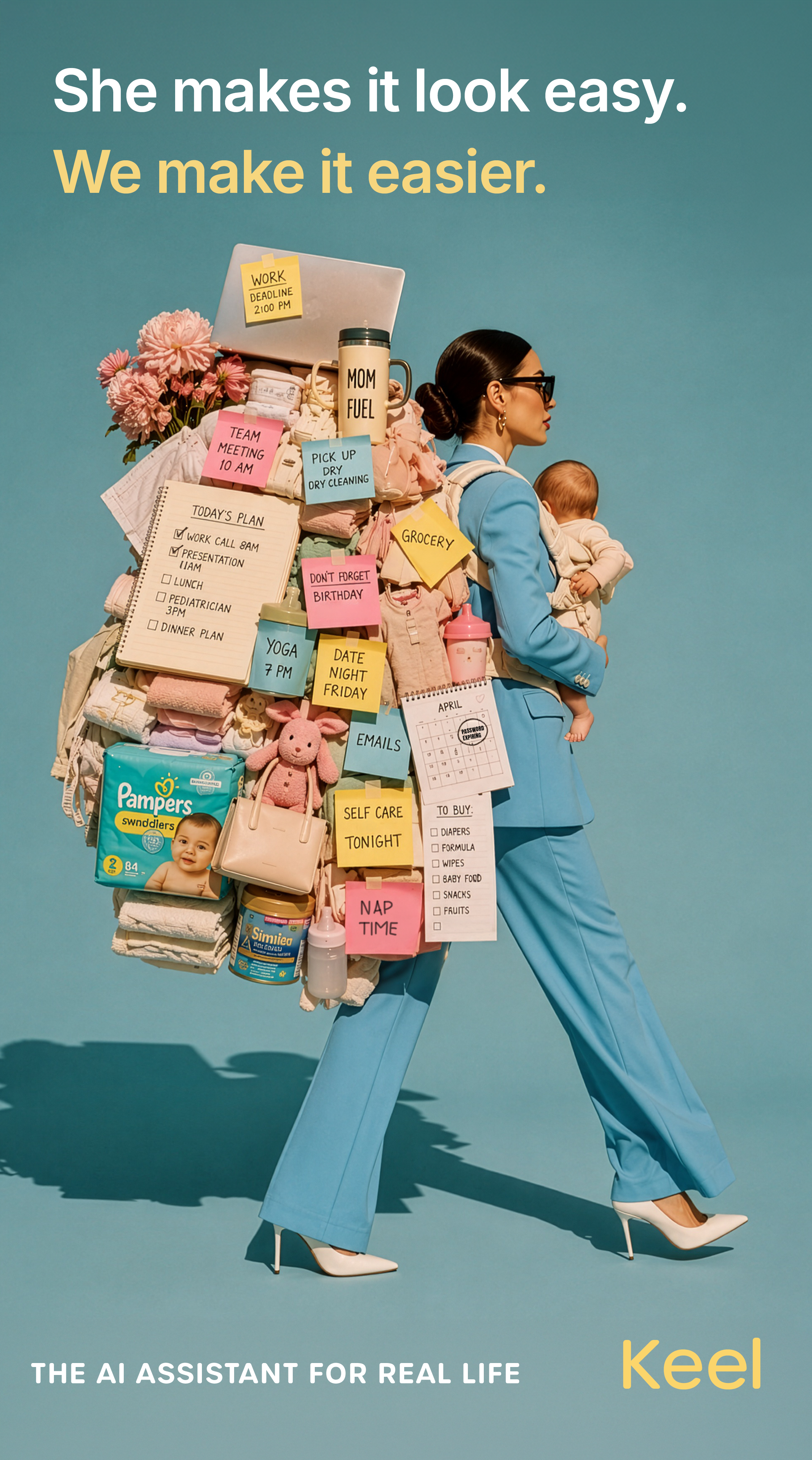
The visual language literalizes emotional and mental load as a physical, overstuffed backpack — stacked with everything from boarding passes and gate-change alerts to diapers, sticky notes, and half-finished to-do lists. The contrast between the composed figure in the foreground and the chaos she's carrying is the entire campaign.
Personas
Two parallel executions were developed to show the same brand promise across different lives:
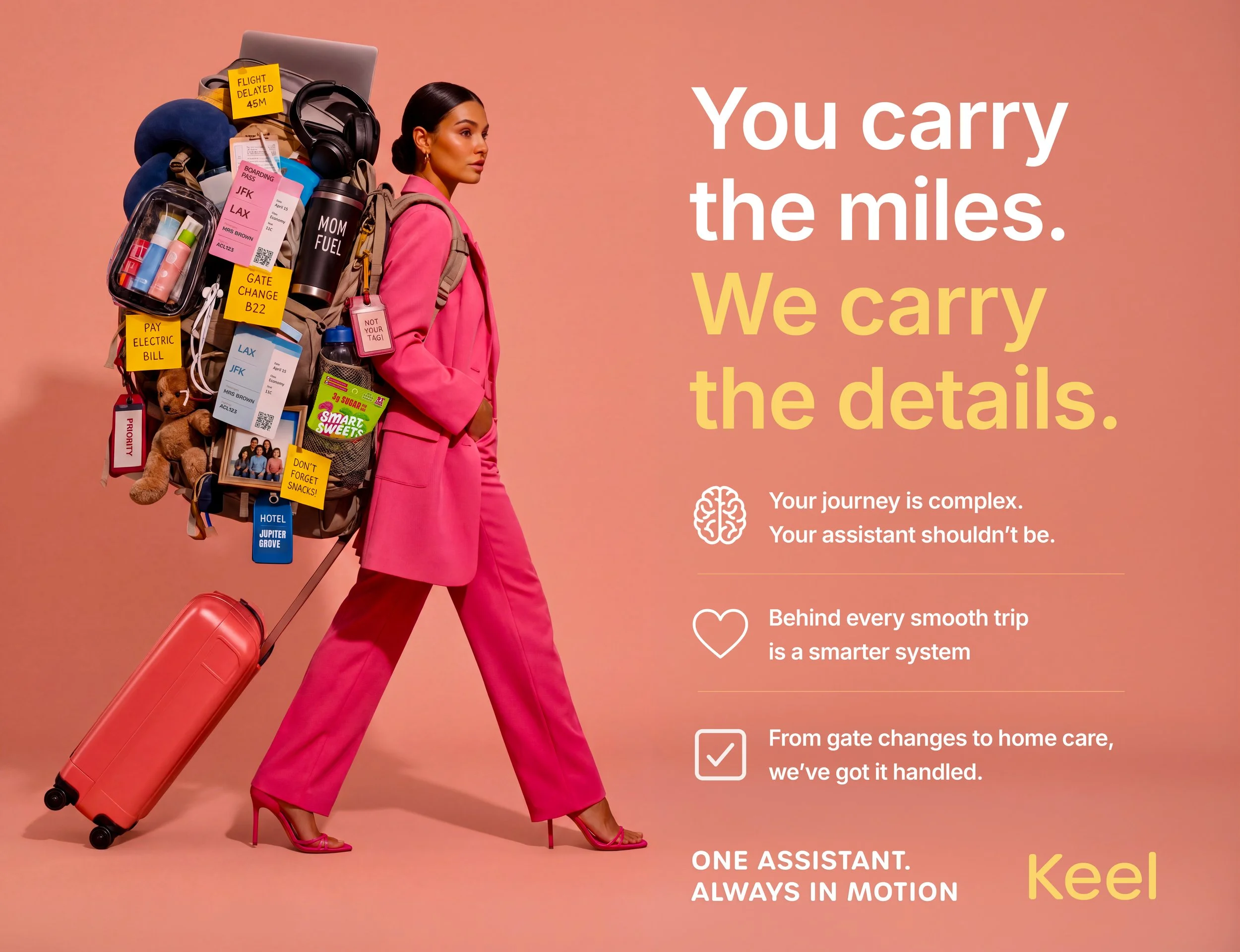
The Traveler — gate changes, flight delays, hotel logistics, the mental tax of constant motion
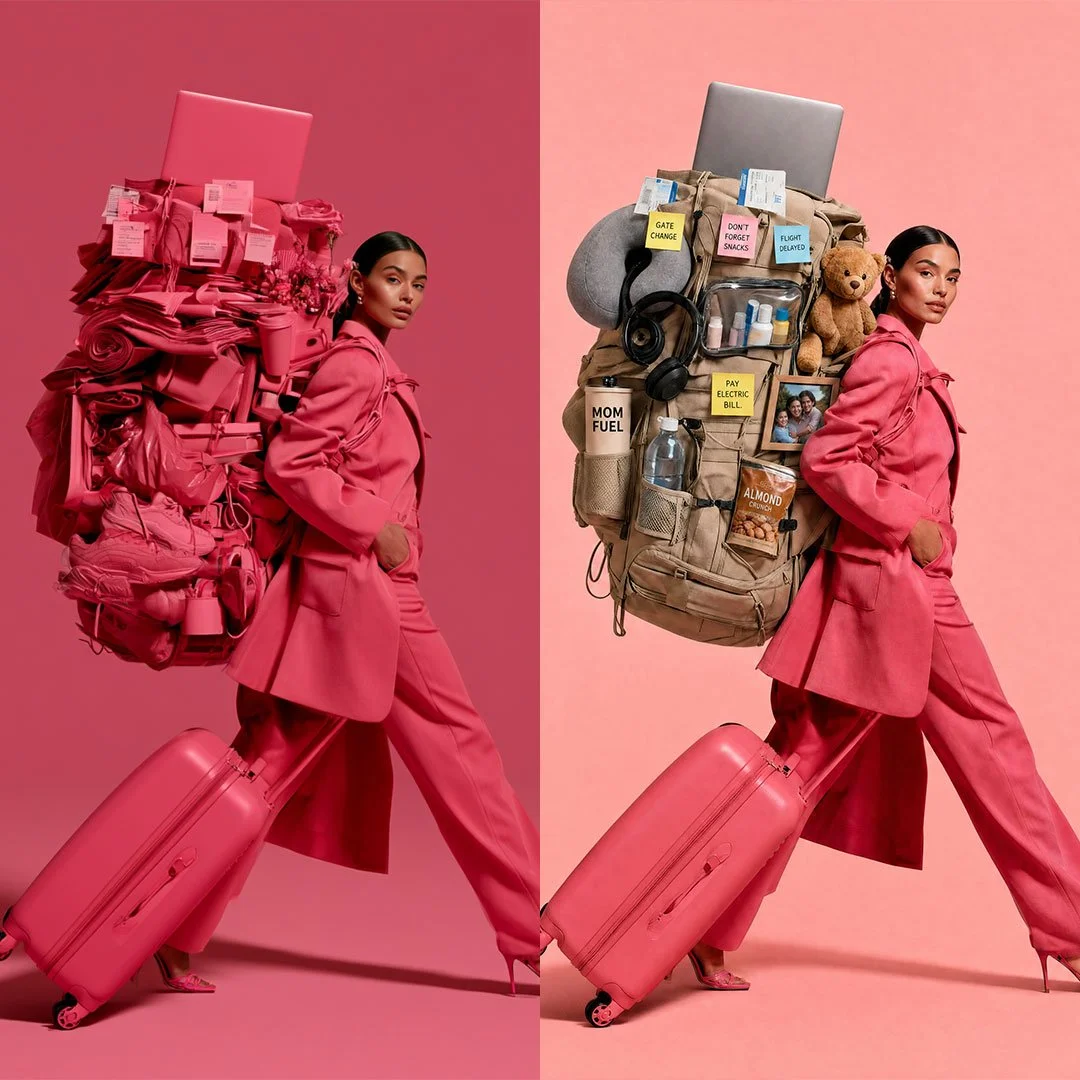
The Mother — work deadlines, pediatrician appointments, snacks, self-care she never gets to, all stacked into one frame
Both share a consistent visual system: a woman walking forward, a backpack of chaos behind her, and copy that reframes her composure as evidence of support, not denial of struggle.
Process
The campaign moved through four tools, each suited to a different stage:
Midjourney for early art direction — testing color systems, composition, and mood before locking a direction
Nano Banana for controlled, detail-level edits — swapping backpack contents, correcting text, adjusting color palettes to unify suit/background/accessories
ChatGPT for iterative refinement, copywriting, and troubleshooting recurring generation issues (illegible text, anatomical errors, compositional drift)
Photoshop for small refinements with text edits
A recurring theme throughout: AI creative tools are precise but not obedient. Getting from concept to a clean final asset required repeated correction passes — fixing garbled sticky-note text, reworking backpack compositions to add specificity, correcting color mismatches between suit and background, and manually fixing small anatomical errors (hands, feet) that AI models still struggle with.


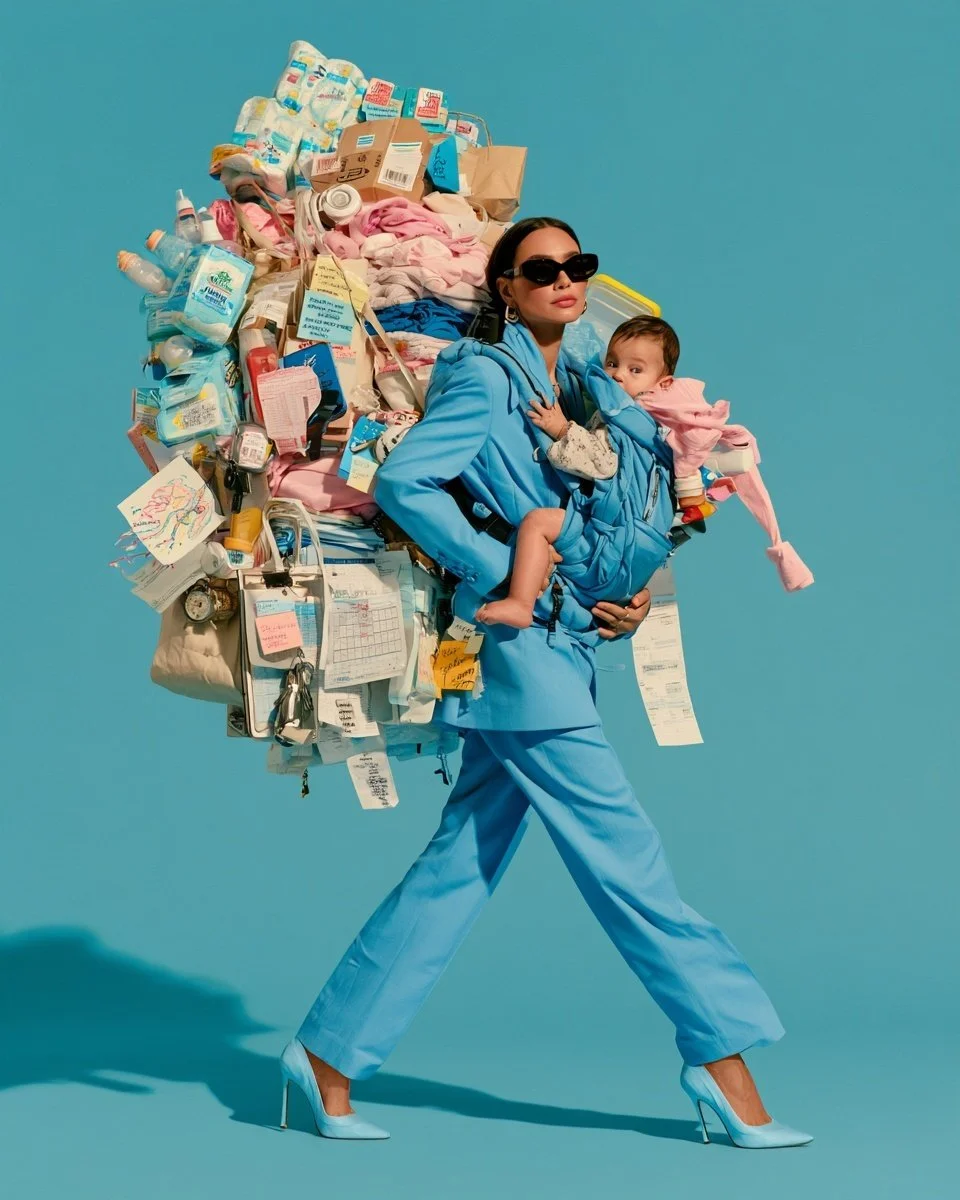


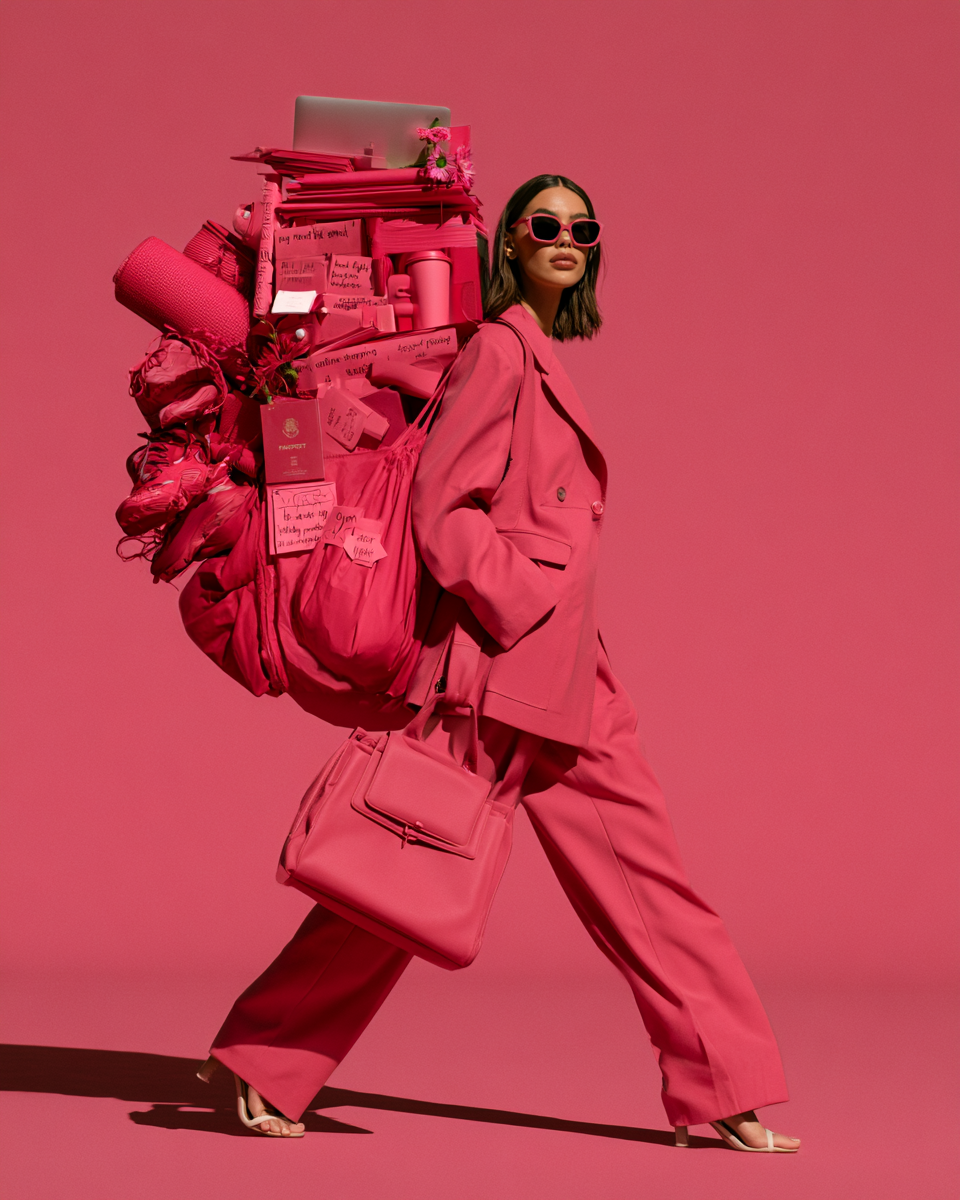
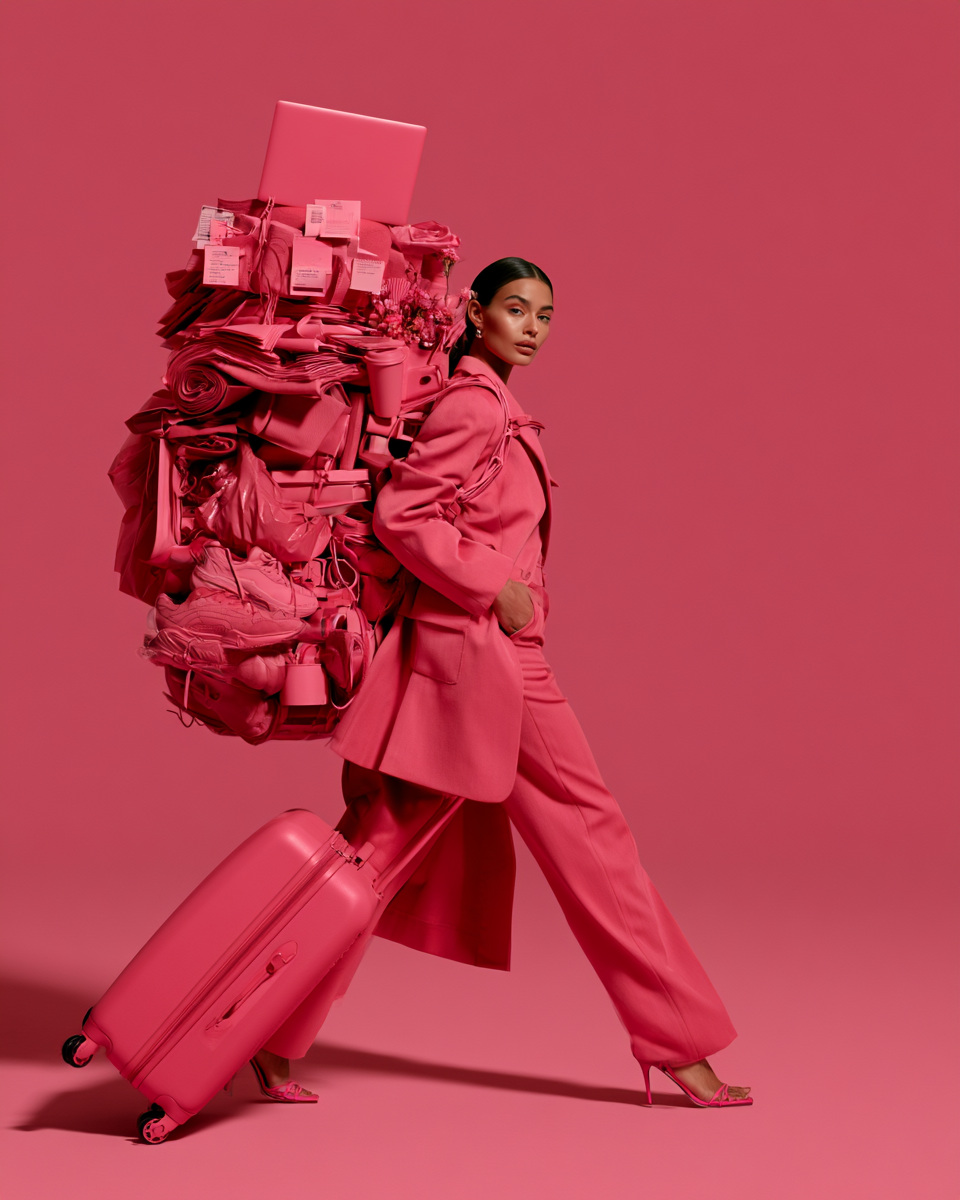

Midjourney was the right tool for finding the feeling of the concept — the overloaded backpack it generated captured the sense of "carrying too much" immediately and viscerally. But the compositions themselves were often too dense: items clumped together into an unreadable mass, with no way to tell one object from another. The metaphor read at a glance, but it didn't hold up under a second look.
That was the direction-defining decision of the project: move from Midjourney's raw mood into Nano Banana, where I could deliberately restack the backpack — choosing specific, legible objects (a laptop, a diaper pack, a "MOM FUEL" mug, individual sticky notes) instead of an abstract pile. The goal shifted from "show overload" to "show what the overload actually is" — because the specificity is what makes someone feel seen, not just the volume.
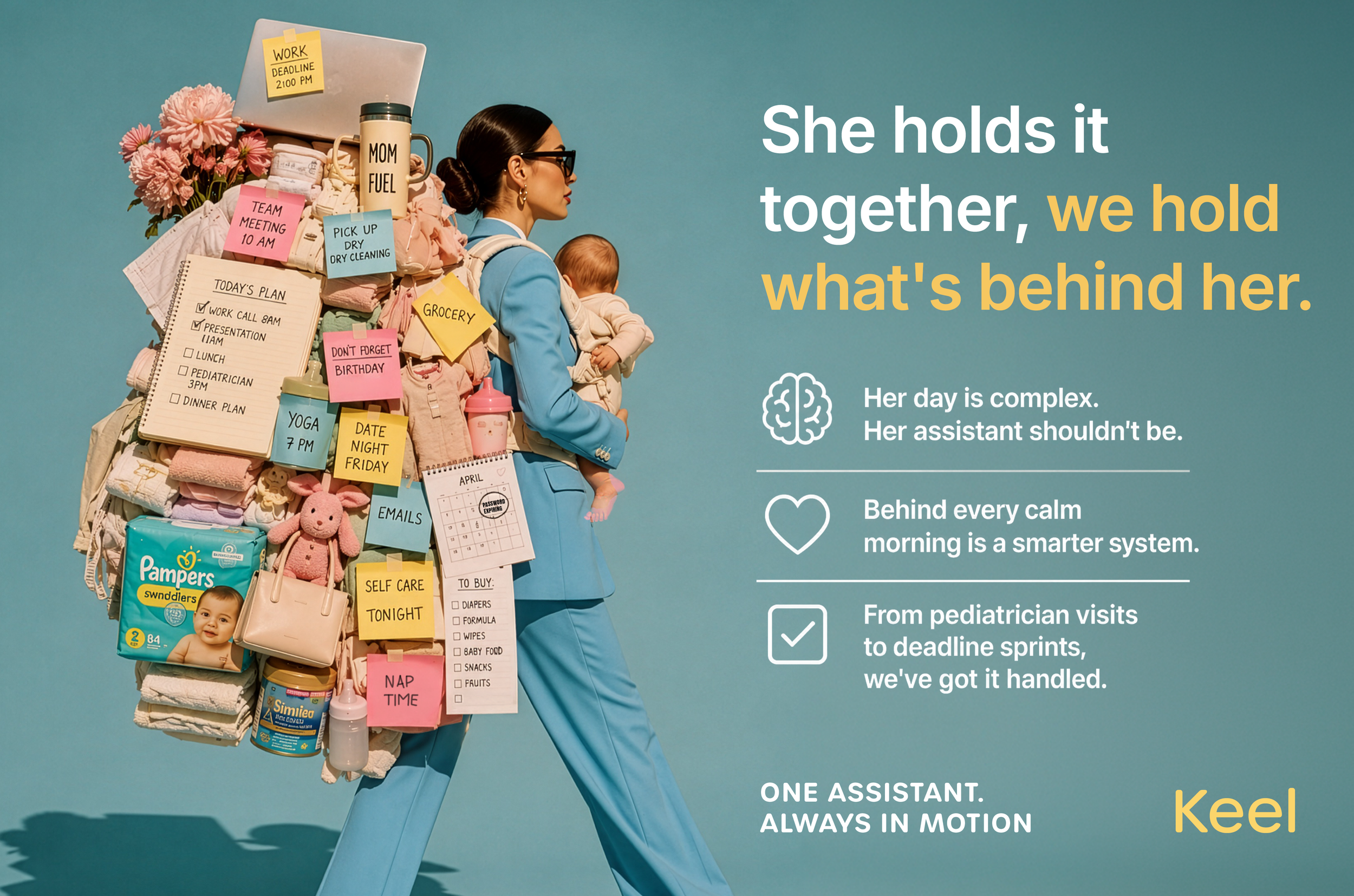
That was the direction-defining decision of the project: move from Midjourney's raw mood into Nano Banana to deliberately restack the backpack with specific, legible objects — because specificity, not volume, is what makes someone feel seen.
COPY
The copy strategy started with a core positioning line: "She holds it together, we hold what's behind her." This became the strategic backbone of the campaign — reframing the visual's tension (a composed woman carrying total chaos) as intentional rather than contradictory. She isn't unaware of the load; she's supported enough not to be visibly burdened by it.
From that foundation, persona-specific headlines were developed to fit each execution. Early drafts leaned into a broader, more generic version of the "carrying" metaphor — "You carry the miles. We carry the details." — which worked but didn't fully capture the "invisible support" idea at the strategy's core.
The final travel headline, "Every gate change, every delay — handled, so she doesn't have to," made the promise concrete and specific rather than abstract, while staying true to the original strategic line: she holds it together; the system holds what's behind her.